Masaaki Kishibe Song BPM Reference
Find 18 tempo references for 17 Masaaki Kishibe pieces, including Boy's Dream, Brilliance of Rime, Hana, Spring Comes and Time Travel, with sources and metronome links.
Match your recording or score before setting the click. Browse 18 BPM references for 17 Masaaki Kishibe pieces, including Boy's Dream and Brilliance of Rime, with sources, versions and beat units.
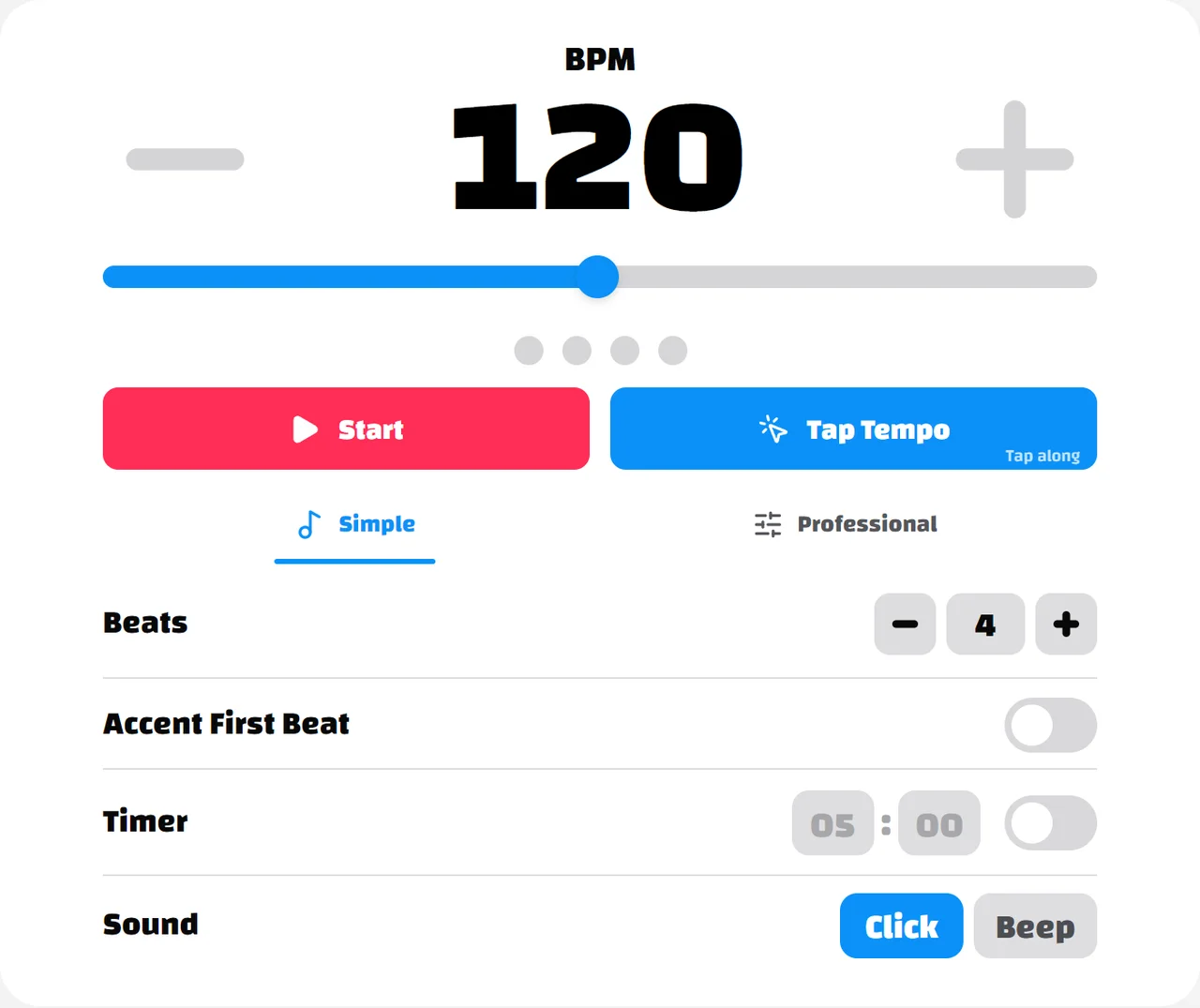
Match the version you are learning
A recording estimate, a transcription marking and a cover performance can give different tempos for the same Masaaki Kishibe piece. Check the version and the written beat unit before deciding how to count. One BPM figure cannot describe every sustained note, phrase-ending pause or change of speed.
This page collects 18 tempo references for 17 pieces, reviewed on November 2, 2026. They are not our own audio measurements or necessarily the composer's official tempo instructions. Recording databases supply estimates; third-party scores describe their own markings. The November entry specifically refers to Daria Semikina's cover and must not be presented as Kishibe's original-recording tempo.
New to tempo markings? Start with what BPM means for fingerstyle guitar practice. For published scores, follow the sheet-music links on Masaaki Kishibe's official website. Inclusion below does not certify a third-party transcription as an official edition.
Masaaki Kishibe song BPM table
Hana has two references: one recording-database estimate and one transcription marking. Durations, release names and transcription details identify source entries rather than every version of a title. A BPM link sets the metronome speed only, not the time signature, subdivisions, tuning or capo.
| Piece | Reference version | Reference BPM | Source and type |
|---|---|---|---|
| Boy's Dream (少年の夢) | Classclef third-party score headed Recollection, first page | 70 BPM | Score marking: quarter note = 70 |
| Brilliance of Rime (樹氷の輝き) | Classclef third-party score headed Miracle Mountain, first page | 160 BPM | Score marking: quarter note = 160 |
| Hana (花) | Listed as the Hana single, 2020, 3:16 | 77 BPM | SongData estimate |
| Hana (花) | GOTABS third-party transcription headed Growing Up | 80 BPM | GOTABS transcription marking |
| Miracle Mountain (奇跡の山) | SlowBE's third-party transcription | 75 BPM | Jitashe score listing: quarter note = 75 |
| Drifting Clouds (流れ行く雲) | Classclef's four-page third-party transcription, first page | 75 BPM | Classclef marking: quarter note = 75 |
| Nocturne / Yasoukyoku (夜曲) | Classclef's seven-page third-party transcription headed Recollection, first page | 95 BPM | Classclef marking: quarter note = 95 |
| November | Daria Semikina cover-performance entry | 71 BPM | Chordify estimate for this cover |
| Take Five | Listed as the Take Five single, 2020, 3:00 | 172 BPM | SongData estimate |
| Umi | Listed under Umi, 2:31 | 79 BPM | Trackify estimate |
| Spring Comes (春、来る) | Classclef third-party score titled Spring Come, first page | 106 BPM | Score marking: quarter note = 106 |
| Time Travel | Classclef third-party score headed 12 Stories, first page | 120 BPM | Score marking: quarter note = 120 |
| Dandelion | Classclef third-party score headed 12 Stories, first page | 158 BPM | Score marking: quarter note = 158 |
| Happiness | Classclef third-party score, first page | 115 BPM | Score marking: quarter note = 115 |
| Rainy Window (雨降る窓辺で) | Classclef third-party score headed Bloom, 6/8, first page | Quarter note 75; eighth-note clicks at 150 BPM | Score marking: quarter note = 75 |
| fu-ta-ri | Classclef third-party score headed 12 stories, first page | 98 BPM | Score marking: quarter note = 98 |
| Wind, Running (風、走る) | Classclef third-party score headed Growing Up, first page | 120 BPM | Score marking: quarter note = 120 |
| A Sea of the Clouds (雲の海) | Classclef third-party score headed Miracle Mountain, 12/8, first page | Quarter note 180; dotted-quarter clicks at 120 BPM | Score marking: quarter note = 180 |
A transcription's marking helps you read that score; it does not establish a single tempo for every original, live or teaching performance. Database release details are also identification clues: we have not independently verified their correspondence with recordings on physical albums.
Rainy Window and A Sea of the Clouds need a beat-unit conversion. Rainy Window marks quarter note = 75; this site's Professional mode counts eighth notes in 6/8, so its link sets 150 BPM. A Sea of the Clouds marks quarter note = 180, equivalent to dotted quarter = 120. Its link is intended for Simple mode, counting one dotted quarter per click, four clicks per measure. Do not copy 120 into Professional mode as the eighth-note speed for 12/8.
Practise bass, melody and space with a click
Choose two to four measures and count the positions of both melody and bass. If the click is difficult to place, tap along with the recording first. Use a steady passage rather than a freely timed introduction or phrase ending.
| Practice task | What to do | What to check |
|---|---|---|
| Identify the beat unit | Read the note symbol beside the tempo and count the measure | Know which note value each click represents; do not count every pluck as a beat |
| Stabilise the bass | Practise the short phrase's bass part with its original rhythms and rests | Chord changes do not rush; counting continues through silence |
| Add the melody | Combine parts at a comfortable slower tempo | Bass notes and shifts do not interrupt sustained melody notes |
| Keep the space | Use a steady click to check the length of sustained notes and rests | You still know where the next beat falls when you stop plucking |
| Increase gradually | After accurate repetitions, try an increase such as 2–5 BPM | Notes stay clear and neither hand tenses to catch up |
| Return to the phrase | Compare accents, breathing and endings with your chosen performance | The steadiness you practised supports the musical phrasing |
The suggested increases are practice advice, not difficulty ratings. BPM alone cannot tell you whether Hana is easier than another piece: note density, independent parts and sustain control can differ at the same click speed.
Follow your score for tuning and capo position; neither can be inferred from BPM. Open the guitar tuner before playing if needed, and see the metronome guide for time signatures and subdivisions.
Questions about Kishibe song tempos
Should I use 77 or 80 BPM for Hana?
Here, 77 BPM comes from SongData's 3:16 recording entry, while 80 BPM is the marking in the GOTABS third-party transcription. These are different kinds of reference; there is no reason to average them. Match your score when reading, or check a steady passage of your recording when playing along, then confirm that the click represents the intended beat unit.
Are Miracle Mountain and Drifting Clouds both 75 BPM?
The two linked third-party scores mark quarter note = 75 on their first pages. That describes those transcriptions, not every recording of either piece. Equal markings also do not imply identical rhythms, note density or phrasing.
Is Nocturne 95 BPM?
The 95 BPM reference belongs to Classclef's Nocturne (Yasoukyoku) transcription. Its first page marks quarter note = 95 and uses 3/4. If you are learning this score, those markings support a three-beat setting; check other editions separately. Confirm the performer when searching, since Andy McKee also has a piece titled Nocturne.
Is November's 71 BPM Kishibe's original tempo?
No. It is Chordify's estimate for Daria Semikina's cover entry, useful when studying that performance. Check separately if you are learning Kishibe's own recording or another score.
What BPM are Boy's Dream and Brilliance of Rime?
The linked Classclef third-party scores mark quarter note = 70 and quarter note = 160, respectively. Boy's Dream begins in 4/4 and Brilliance of Rime in 3/4. The links set speed only; select the time signature separately. These markings belong to the named scores, and you can begin more slowly if that helps you repeat a phrase accurately.
What metronome speed should I use for Spring Comes?
The newly included Classclef score is titled Spring Come and headed Miracle Mountain. Its first page marks quarter note = 106 in 4/4, providing a 106 BPM reference for that transcription. Check the pulse and tempo separately when following another recording or teaching version.
For other performers, return to the fingerstyle guitar BPM overview or the Kotaro Oshio song BPM reference. To begin, open the metronome at a speed where you can repeat your short phrase accurately.
